Showing posts with label northeast heights. Show all posts
28 February 2014
Four Paragraphs Referencing Wyoming Boulevard
Rudolfo Carrillo
11:08 PM
1970s, Albuquerque, Albuquerque history, antipasto, food, movies, northeast heights, Wyoming Mall
by Rudolfo Carrillo
Here are some things about Albuquerque you might like to know.
There was a thing called the Wyoming Mall. It was indoors y todo and had a fancy movie theater in the middle. The film house was decorated in blue and various shades of grey. This was in direct contrast to other suburban cinema hideaways in the city. The other movie theaters in town were for the most part red and gold colored on the inside. All of them showed the latest in popular celluloid fantasies but the ushers at the Wyoming Mall Cinema had to wear bowties.
A small record shop stood beside the theater and a store called Yanamoto's next to that. At the former a man in thick-lensed glasses went on and on about The Animals and The Yardbirds. He made most of his money selling rolling papers and small stone pipes from Mexico that resembled carved onyx chess pieces. At the latter outlet, rare Asian imports were craftily combined with a vision of post-war SoCal, at once confusing and robust. It was possible to get lost in the kimono aisle; the smell of tiki lamps blazing away during daylight could be intoxicating.
If you walked past the hobby business and it smelled like model airplane cement, that was okay. The sign in the window said they only sold the junk with the purchase of a complete kit, something along the lines of the Queen Mary. Or a tricked-out '55 Chevy Belair, a P-38 Lightning, or a 1/32 scale, assemble-it-yourself diorama of Washington crossing the Delaware. Each boxed project cost about 20 clams, way steep for casual users. Mostly it was pretty square like that, except for the shortwave radio display. A dude with a flattop and shop glasses (like the ones what are considered hep by kids these days) would yell at anyone who tried to tune in Moscow or Havana.
The cafeteria was decent but lacked the dusky theatrics of the big dark Italian restaurant on the periphery of this lost world. Over there were 42 varieties of sauce, possibilities of sausage, pasta shaped like smooth orifices into another world. Primitive video games and mechanical fortune tellers beeped and clunked while Neapolitan art songs were piped through crackly speakers. It was moody, mostly lit by candles and colored lights. The tablecloths were the checkered kind. Sitting down at a table for bread and antipasto meant forgetting whether it was dark outside or light.
15 November 2013
Vignettes from Trail Number 192
Rudolfo Carrillo
10:17 PM
Albuquerque, datura, Embudito Canyon, enchiladas, Garcia's Mexican Kitchen, hiking, northeast heights, Sandia Mountains, tortillas
by Rudolfo Carrillo
i.
Twelve years on, Charlie Jones, Jr. had grown to be fatter than hell. At least he was trying to lose it. Some days he was a hundred percent, fucking-A sure he was gonna have a heart attack. But on he went, huffing and puffing anyway, just to see how far he could get in the pinche universe where he had been randomly embedded.
Jones switched to a diet of falafel and Gatorade, and walked around as much as he could. His repeated circumnavigation of campus and through the labyrinthine parking facilities kinda reminded Charlie of the misty past, of the time when he walked around the world in a pair of combat boots stolen from the king of the heavily guarded watermelon ranch on the edge of town. Here was a simpler task called Embudito Canyon.
ii.
The enchiladas were decent and the sauce was bitter too. It was possible to imagine the tortillas were of extraterrestrial origin. Monroe favored corn tortillas, served in a stack. Abelard and Charlie argued over the remaining flour tortilla, rolled up in a bit of foil like a magic carpet or an extra-special cigarette.
Up there in the shadow of the famous mountain, the three returned a guitar with magical properties to a scientist, wandered through flat-roofed neighborhoods, rolled down the windows to let the dry air of the western lands wash through their eyes, and now sat eating lonche at Garcia's. Pass the honey, said Abelardo.
iii.
Jones reckoned that one way to tell if a gal was the right one was to take them hiking and to start off with a rough trail too. A hearty New Mexican meal beforehand probably wouldn't hurt either. But Darlene was different. For one thing he could not tell one goddamn way or the other whether she was amused or horrified when red chile squirted out of the burrito he was consuming and onto his shirt, accompanied by a sound that resembled radioactive decay.
Charlie and Darlene trekked up Trail 192, stopped at a small meadow, and continued upward into a part of the Earth where huge trees erupted from huge rocks, waving their limbs greenly toward the heavens beyond the canyon walls. He talked a lot about all the plants and animals and people that he associated with the mountain, how some of them had walked here and they had been together. She looked up at the sun and smoked another cigarette, and crouched to touch a cactus and looked at the sun again with her small white hand over her brow.
iv.
Stop here and I will take your picture, said Abelardo. Monroe walked over to a datura plant and attempted to communicate with it using ceremonial Nahuatl. Charlie Jones, Jr. lumbered his elephantine arse over to the trail marker and remarked on the importance of making certain the sign was clear and visible in photographic reproduction. Who knows when we will ever be here together again, said Charlie, as a lizard zoomed by and into the multitude of sage while the datura plant replied by blossoming and Abelardo touched a button on his phone.
The wind was coming down the canyon. Snakes could appear and there was a certain blueness to the colors the three men saw up there. They climbed up onto the rocks. There was some blood but mostly symbols mixed up with the granite and sandstone. Here was a water hole, there a length of sandy earth crossed with animal tracks. After an hour passed and dusk washed over their skin, Charlie and Monroe and Abelardo naturally wandered back to the rental car. They were fascinated with metal and electricity. The moon hovered.
07 October 2012
Two Octobers
Rudolfo Carrillo
9:21 PM
Albuquerque, Balloon Fiesta, Cervantes, Don Schrader, family, Mustang, Nepal, northeast heights, Shiva
By Rudolfo Carrillo
I reckon I ought to warn the reader about how this post follows no particular order, how this update from the back side of a ridge that still faces the sun in winter - but is now covered in unique three-bedroom homes, lush gardens that could not grow here naturally but ironically, and so perversely prosper, growing green and prosperous on well water that has more than likely been poisoned by the fluid by-products of war-inspired technology - will just kinda shift from year to year.
Right now, it is getting on toward evening on the seventh day of October in the year known to some as two-thousand-and-twelve, but I might be apt to jump about temporally using random and unadorned methodologies. For instance, the last time we met like this, I told you about the time I flew into Mustang.
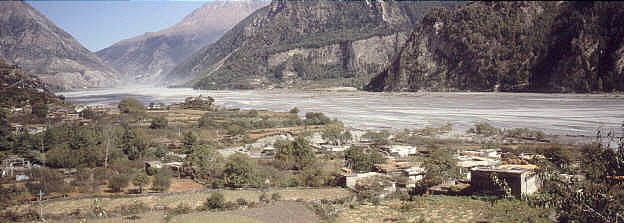
During the first week of October nineteen-hundred-and-ninety-six, I trekked up to Muktinath. I stayed for a few days, mostly to get used to the height of the place, which was something like 12,170 feet. I was thinking on whether I should go on up further into the mountains. Muktinath was the last town on the trail before the portion of formidable earthly geography known as the Thorung La Pass.
Ten miles on and located at the most unkind elevation of seventeen-thousand-and-eighty feet was a place where the earth touched the sky roughly, I imagined. I looked to the east as I rushed back down the trail. As I dragged my ass into town at sunset - pulling an old Tibetan pony behind me that was no good for riding due to my ample girth, but was just fine and dandy for carting camping equipment just the same - I wiped a grip of mud from my Ray-Ban Wayfarers and said the hell with it.
I settled into an inn with electricity and a flush toilet down the road a-ways from the trail, a suburb of sorts called Ranipauwa. It is mostly a collection of inns, restaurants, and horse stalls developed to make a commerce of all the pilgrims, hikers, ghosts, and new age savants that traipse through the collection of temples, monasteries, and holy shrines that comprise Muktinath.
The kid that ran the office downstairs had Bon Jovi posters tacked up onto every available free wall surface and went on and on about the hair band from New Jersey and Michael Jackson; what was it really like in the United States anyway, he half-whispered, as he passed me a room key.
In case you are interested, as I have sorta hinted at up above, the town called Muktinath, in the province of Mustang, has deep signifcance to Buddhists and Hindus. There is an ancient temple to Vishnu there, with a golden statue inside and a fountain in the courtyard that pours out very cold water forever from 108 intricately fashioned bronze bullheads.
Padmasambhava, is supposed to have walked through Muktinath on his way to Tibet; wherever he trod, the humans that live there now say, poplar trees sprang from the ground. There is a beautiful poplar orchard at the edge of that temple and it was wagging in a fierce breeze on the day I came to town.
Three days later, I headed back down the mountain. By the seventh evening in October, I arrived in Larjung, a small village on the edge of the river where a few Tibetan refugees scratched out a living by growing buckwheat and marijuana. I rented a room for the night at a shabby guest house. Excepting years of dust and complex spiderwebs, my quarters were dark but comfortable. As I drifted off, I listened to the local monks playing football on the water's edge.
I dreamt of my mother that night. She was wearing an elaborate silver crown and a white dressing gown as she descended the far western escalator at Coronado Center, a shopping mall in Albuquerque, New Mexico. She was smiling and radiant and wanted to reassure me that things were just fine back at home.
Of course, that wasn't the case. She was actually in a hospital bed at Lovelace Medical Center, dying. It took me another week to trek down to where the road to Kathmandu slithered out of the mountainside. During that week, I saw some of the most sublime and wondrous and beautiful things a man might ever hope to see, but the bus ride back was long and shitty and hideously hairpin; I kept having to lean my head out the window to vomit.
I left Nepal behind a few days after my mother died in Albuquerque. I had ten American dollars and five-fifty in Singapore currency for the twenty-one hour plane ride back. At Changi Airport, I had a twelve-hour layover so I spent the sawbuck at the bar, drinking cheap whiskey. I passed out at my table and dreamed about my mother again. She was young and full of life and wanted to lecture me about what I needed to do to get my life together after she died.
The next morning I awoke to find the bartender rifling through my jacket, telling me I probably better get out of there soon and back to the transit lounge because someone might call the police; I had long hair, after all.
I spent the five-fifty on a burger and coke at McDonald's and almost missed my connection because I was watching the Crocodile Hunter, a new nature show that had just debuted on Australian teevee. It was being piped into the terminal in Singapore at various and sundry locations for the benefit and amusement of the multitudes of English-speaking passengers headed back home to warmth and convenience.
But, back in Burque, it was cold and windy. Winter was setting down its plan, much like it seemed to be doing last night. Mostly folks were glad to see me come back, but sad and angry that I had missed my mother's funeral. I drifted around very mournful for a couple of weeks, then took a job teaching English at Ernie Pyle Middle School. Anywho, I'd usually cry on the way to work from the Heights; Albuquerque was so beautiful, my mother was dead, and the Himalayas were very far away.
I remember a few people that I worked with down at that school, like the burnt-out science teacher who always wore chunky Navajo bolo ties and constantly picked at his goatee beard while complaining about how dangerous kids are these days. But mostly that part is foggy since I was still seeing mountains and temples and blood sacrifices to Shiva whenever I closed my eyes.
A little less than sixteen years later, I closed my eyes again as I sat in the back yard and soaked up sunlight while my dogs barked and danced around the vestiges of an Indian summer wherein the weather is damned warm during the day but cool and languid by night. Some sort of vintage aeroplane flew over the house at about four in the afternoon and its engines sounded mysterious to me.
Later on, at Ghetto Smith's, my wife and I passed Don Schrader in the produce department and he said howdy. He was wearing more clothes than I was used to seeing these past few months, it being autumn and all. I gave a respectful hello back and Samantha said hi and waved.
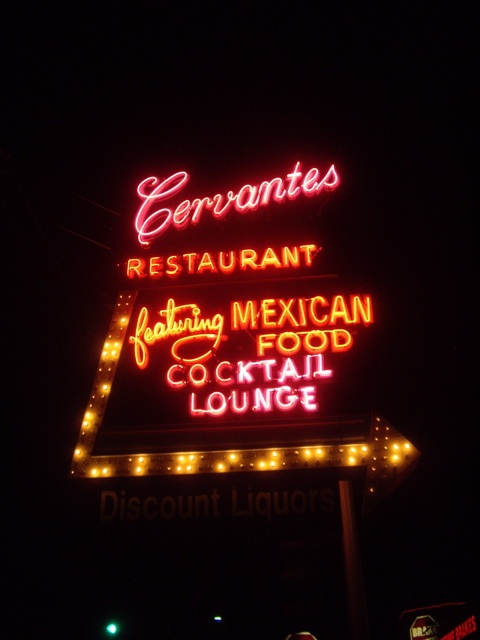
After all that, we waited at Cervante's Restaurant half an hour for our take-away enchiladas, but that was okay with me because you expect that kinda action during the first week of October when the Balloon Fiesta is upon us and the town, and that restaurant is also filled with tourists and pilgrims, ghosts and all sorta seekers of higher places. Just what you would expect in a place with mountains.
16 January 2012
A Selection From the Wide Valley of Hope and Order
Rudolfo Carrillo
9:43 PM
Albuquerque, Burque, Corrales, history, Las Cruces, New Mexico, northeast heights, Territorial House
by Rudolfo Carrillo
As it turns out, the history of this state, even rendered and distilled into an extra-complex and viscous fluid of strategies as I have previously employed here, is dang popular. People like to read about stuff that happened to people who came out onto the earth in these parts before we were around.
With that concept in mind I turned the wheels in my head loose, locating all the odd stories that I heard from my old man and his kin, plus the stuff I experienced here, so far, myself.
Rambly as all of that may be - and it may get that way on purpose, just to swirl you around into all the different worlds and different places that I can construct with a finite set of alphanumeric characters - its mostly stuff that really happened.
Combined with an embedded set of ideas in each of my readers' heads about how to decode and organize those text-strings, the result, as any carnival barker will tell you, is to inform, amuse and perplex. It is no joke that I hope you all get something close to magic from said interaction.
So I am going to start with nineteen forty-five and wind my may through to the summer of nineteen seventy-five, before I drop you off somewhere about Christmastime, nineteen ninety-five.
After the war was done my father and his brother, their cousins who lived, and the friends who they grew up with, came home to Las Cruces. Even the ones lucky enough to be physically whole had been changed; whatever came before seemed ghostly and unkempt. Now they were thin restless souls returned to the desert, to a place of elusive order where some plants took forty years to bloom.
Men like this were scattered through New Mexico like the seeds of a new commodity, each mixed thoroughly into the rich soil of rediscovered locality and regional potential. Their assimilation into american culture and the economic success such entailed was anxiously informed by the military culture they brought back to reside with them in their flinty and orderly hearts. It was in the quick cinderblock ranchitos that appeared with waxen spontaneity on the edge of town; it was in the smooth concrete, built up from the sand next door and the river down below - deposited lovingly, but certainly as an intricate cover too - masking what remained of the past, dry and crummy as it was, had been, or was imagined to be.
There were demonstrations of American exceptionalism and what had been woven into their wartime souls poured out into their lives on the mesa. On more than one occasion, they trucked in trees from California and the new vegetative entities bloomed and otherwise professed greenness and fruition all damn year long.
Along the northern passage and in the midst of la jornada del muerto, immense reservoirs had been constructed so that once abandoned nautical fantasies could be pleasantly revisited, every weekend, ad infinitum. From those driftingly buoyant castles, they dreamt of Burque. To my people that place danced on the horizon like a daikini possessed by an atomic grandeur that could only possibly yield meaning through communion.
Assuming the measure of control desired and to some degree attained by the post-war prodigals, it is a wonder that any chaos crept out of all that beauty and strength and yearning, to walk down the bright boulevards and through the tamed tropical replicas, howling and mournful, as misadventure is wont to do.
But that's what this story is all about, now that I come to think on it.
You see my folks weren't the first to creep hopefully and by moonlight towards the fabled and fabulously well-to-do El Norte.
My old man 's sister Cuca married a restless and pugnacious state cop named Robert Gilliland. They settled in the northeast heights during the mid nineteen sixties. Their kids went to Sandia High. We were there too, mostly on the weekends, staring out at the arcadian world which surrounded them, gracefully and efficiently.
By the time the decade turned, Gilliland had grown disenchanted with the kind of law enforcement that happened along the state's highways. He retired honorably and bought a restaurant in Corrales.
The place was called the Territorial House. Besides the full-on biker bar that sat on the corner of the lot, the property had a notorious reputation. Two men had died there in a gun battle back in 1898. The cottonwood in front by the road was well-known to old-timers as a hanging sort of tree.
But the place was successful; Robert and his business partner, Monie Sanchez, ran a tight ship, pouring their restive hearts into it every night, dreaming by day of controlling this world and that one.
In the summer of nineteen hundred and seventy-five, two men entered that bar I told you about. Some say they came to rob, others said their motives were more vengeful and complex than that. In any case, gunfire erupted while Sanchez was at the cash register and my uncle was in a back room. The assailants fled from the critically wounded man, but were unusually calm and collected, walking back to their car in the parking lot, unaware of Gilliland, who grabbed a shotgun from under the counter, followed the men out and shot them to death where they stood, with the engine running and the AM radio blaring.
Robert Gilliland walked inside and called the police. Then, he dialed up my old man and breathlessly told him everything before he collapsed on the floor and died of a massive heart attack.
Twenty years later, when I was working a slacker job at an art supply shop in Nob Hill, the boss chose the Territorial House for the company Christmas dinner. At the time, the joint was called Rancho de Corrales, but the bar was still there, the tree, too. I took my brother along and we were both mighty uncomfortable during the proceedings. The fellow that ran the art shop, Ernie, was just as confused as could be about all that, especially when all we could do was mumble about how clean and organized the whole place seemed to be. Sure, there were ghosts lurking there, but you wouldn't a known it by the way the art store people carried on that night.
As it turns out, the history of this state, even rendered and distilled into an extra-complex and viscous fluid of strategies as I have previously employed here, is dang popular. People like to read about stuff that happened to people who came out onto the earth in these parts before we were around.
With that concept in mind I turned the wheels in my head loose, locating all the odd stories that I heard from my old man and his kin, plus the stuff I experienced here, so far, myself.
Rambly as all of that may be - and it may get that way on purpose, just to swirl you around into all the different worlds and different places that I can construct with a finite set of alphanumeric characters - its mostly stuff that really happened.
Combined with an embedded set of ideas in each of my readers' heads about how to decode and organize those text-strings, the result, as any carnival barker will tell you, is to inform, amuse and perplex. It is no joke that I hope you all get something close to magic from said interaction.
So I am going to start with nineteen forty-five and wind my may through to the summer of nineteen seventy-five, before I drop you off somewhere about Christmastime, nineteen ninety-five.
After the war was done my father and his brother, their cousins who lived, and the friends who they grew up with, came home to Las Cruces. Even the ones lucky enough to be physically whole had been changed; whatever came before seemed ghostly and unkempt. Now they were thin restless souls returned to the desert, to a place of elusive order where some plants took forty years to bloom.
Men like this were scattered through New Mexico like the seeds of a new commodity, each mixed thoroughly into the rich soil of rediscovered locality and regional potential. Their assimilation into american culture and the economic success such entailed was anxiously informed by the military culture they brought back to reside with them in their flinty and orderly hearts. It was in the quick cinderblock ranchitos that appeared with waxen spontaneity on the edge of town; it was in the smooth concrete, built up from the sand next door and the river down below - deposited lovingly, but certainly as an intricate cover too - masking what remained of the past, dry and crummy as it was, had been, or was imagined to be.
There were demonstrations of American exceptionalism and what had been woven into their wartime souls poured out into their lives on the mesa. On more than one occasion, they trucked in trees from California and the new vegetative entities bloomed and otherwise professed greenness and fruition all damn year long.
Along the northern passage and in the midst of la jornada del muerto, immense reservoirs had been constructed so that once abandoned nautical fantasies could be pleasantly revisited, every weekend, ad infinitum. From those driftingly buoyant castles, they dreamt of Burque. To my people that place danced on the horizon like a daikini possessed by an atomic grandeur that could only possibly yield meaning through communion.
Assuming the measure of control desired and to some degree attained by the post-war prodigals, it is a wonder that any chaos crept out of all that beauty and strength and yearning, to walk down the bright boulevards and through the tamed tropical replicas, howling and mournful, as misadventure is wont to do.
But that's what this story is all about, now that I come to think on it.
You see my folks weren't the first to creep hopefully and by moonlight towards the fabled and fabulously well-to-do El Norte.
My old man 's sister Cuca married a restless and pugnacious state cop named Robert Gilliland. They settled in the northeast heights during the mid nineteen sixties. Their kids went to Sandia High. We were there too, mostly on the weekends, staring out at the arcadian world which surrounded them, gracefully and efficiently.
By the time the decade turned, Gilliland had grown disenchanted with the kind of law enforcement that happened along the state's highways. He retired honorably and bought a restaurant in Corrales.
The place was called the Territorial House. Besides the full-on biker bar that sat on the corner of the lot, the property had a notorious reputation. Two men had died there in a gun battle back in 1898. The cottonwood in front by the road was well-known to old-timers as a hanging sort of tree.
But the place was successful; Robert and his business partner, Monie Sanchez, ran a tight ship, pouring their restive hearts into it every night, dreaming by day of controlling this world and that one.
In the summer of nineteen hundred and seventy-five, two men entered that bar I told you about. Some say they came to rob, others said their motives were more vengeful and complex than that. In any case, gunfire erupted while Sanchez was at the cash register and my uncle was in a back room. The assailants fled from the critically wounded man, but were unusually calm and collected, walking back to their car in the parking lot, unaware of Gilliland, who grabbed a shotgun from under the counter, followed the men out and shot them to death where they stood, with the engine running and the AM radio blaring.
Robert Gilliland walked inside and called the police. Then, he dialed up my old man and breathlessly told him everything before he collapsed on the floor and died of a massive heart attack.
Twenty years later, when I was working a slacker job at an art supply shop in Nob Hill, the boss chose the Territorial House for the company Christmas dinner. At the time, the joint was called Rancho de Corrales, but the bar was still there, the tree, too. I took my brother along and we were both mighty uncomfortable during the proceedings. The fellow that ran the art shop, Ernie, was just as confused as could be about all that, especially when all we could do was mumble about how clean and organized the whole place seemed to be. Sure, there were ghosts lurking there, but you wouldn't a known it by the way the art store people carried on that night.
Subscribe to:
Posts (Atom)